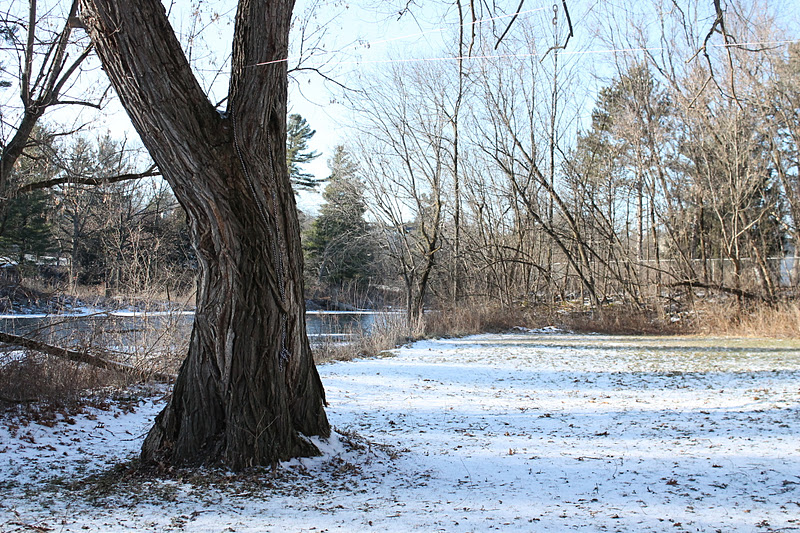
“If you go slowly enough, six or seven months is an eternity—if you let it be—if you forget old things, and learn new ones. Even a week can last forever.”
Rick Bass, Winter

"In the midst of winter, I finally learned that there was in me an invincible summer."
Albert Camus

Showing posts with label outdoors. Show all posts

Sunday, February 19, 2012

Day 74: The Goblet is Two-Thirds Full, or Sunday Reflections on the View from Here

Dear readers,
As of this Friday I had completed 72 of the 108 consecutive posts I have charged myself with writing in "Winter with Zoe: Meditations on Love, Dogs, and Mortality."  The goblet is 2/3 full (plus a couple sips-worth.)  Whether you've just stumbled on this blog for the first time, or you've been here many times before, I'm so grateful to you for reading.

When my wicked sister, Mira Bartok (blame her!) suggested that I do my second round of 108-straight days of meditating and journal-writing in this public way, I wasn't sure if I could come up with enough material.  I love a good challenge, but on busy days my journal tends to look something like this:
went to vet's.  new meds for Zoe.  teaching was fine.  salmon for dinner.  dreamed i was about to get on row boat to India and my sister was beside me, wrapped in a blanket.  I had to protect her.  meditated for 20 minutes.  gym.
To write 108 mini-photo essays that don't just read like a rushed journal entry, but actually have a beginning, a middle, and an end, and something resembling an epiphany--i.e., something someone might want to read--is certainly a test, but I've really enjoyed the challenge.  To be honest, I love it.  Sometimes it's all I want to do.  My normal mode of writing is to hide in my corner for a few years perfecting the same sentences and then to show the fruits of my labors to my agent or send it out to a magazine and wait for a long time.  Then, if it is published, I don't always hear back from readers.  It's very exciting and fulfilling to send something out into the world early one morning and then realize later in the day that people have not only read it, but have comments to make. 

But the speed of the blog world is dizzying sometimes, especially for someone like me, who loves leisure and can't get enough of it.  Sometimes on rushed mornings I would post, then leave the house, and then realize that I'd made a type-o and would not be able to fix it for hours.  I was in the car en route to the dentist's when I pictured a sentence in which I had written "cramp-ons" instead of "clamp-ons" to describe what we all needed just then to navigate the icy sidewalks.  I often make Freudian slips; I was probably thinking of how our feet cramp up as we try to stay upright.  A post is easy to correct, but if you don't get to it right away, you've sent a mistake out into the world.  That's the nature of a genre for which speed and immediacy are its most salient features.

One big help has been the daily meditation.  I've written several posts about it, including an early one, Day Two: Meditation for Skeptics, Slouchers, Neurotic Planners, Caffeine Addicts, and for People who Think they are Too Busy to Meditate but Want to, Day 58: The Chew-Dog Mantra for Dog Lady Meditators, and Day 33: Monday Morning Music, and  Day 65: The Yoga of Sitting Upright.  I have found that when I begin the day with a mindfulness practice like meditation, everything else, including the writing, comes through with more clarity and purpose.

Doing this amount of writing in short daily bursts has been good for my other writing, which surprised me.  It sort of limbers me up, makes me more honest, and nimble, and I've found that the novel I started revising this winter has a fresher voice.  I'm more willing to take risks now; I'm not so careful.  And I've also learned to follow a great writing schedule that not only makes me get the pages written, day after day, but also helps me pace myself and guard my energy, which protects me from burn-out.

(Check out Day 56 : Gargoyles In Love: the Search of the Perfect Schedule, Part III)

When I began "Winter with Zoe," it was December, but there was still no snow on the ground.  We've had a very mild winter.  Yesterday a friend told me her dog had just been skunked, and that when she went to the animal hospital to buy Skunk-off, she was told that many dogs have been coming in this winter with porcupine quills as well.  Critters that should hibernate haven't.  I wonder if they are walking around feeling exhausted, wishing they could get a good winter's sleep, wondering what has happened to our planet.  Here in the North Country, we have had such freaky weather: rain, freezing rain, slush, then cold, that we've mostly had to navigate ice, not snow.  (And hence the need for "clamp-ons," which I have yet to buy.)  I've written a number of posts about learning to walk on ice with Zoe, and how her new status as a tripod has taught me a great deal about perseverance and grace.

(See Day 48: Mindful Winter Walking).

I've also learned to take better pictures, thanks to Tara Freeman, who gave me some lessons.  Buying a better camera also helped.  The Canon Rebel T3 is easy-to-use and although I haven't even begun to explore all of its capabilities, I've enjoyed having something new to learn and to find a new way of seeing, a new form of expression.

(See Day 63: Teaching These Two Old(ish) Dogs New Tricks.)

And as for the dog herself, the star of the hour, the dog who launched six dozen posts, she's doing well.  A few days before I started the blog, I had taken her to Ottawa for her fourth chemotherapy appointment.  We received the devastating news on that day that the cancer had spread to her lungs.  But in the two and a half months since that visit, she has fought back, with the help of the doxorubicin injections, and has kept things at bay.  From visit to visit, some tiny nodules would emerge, while others would disappear.  Except for two isolated days when she had no appetite, she has been vigorous and queenly, as usual, and is always eager for her two daily walks.  Most people who see her think she looks as healthy and vital as ever.

I think the posts I'm most glad to have written are the ones about her visits to Alta Vista Animal Hospital in Ottawa for chemotherapy and lung x-rays.  I thought these posts would be very painful to write, but sometimes they wrote themselves.  I am going to turn some of this into a book, and having the challenge of writing about these visits, which were all quite emotional for me, has helped me keep a good record of the story as it unfolds.  Zoe's oncologist and the two vet techs, Dr. Bravo, Willow, and Donna, are keeping Zoe alive, and the challenge of telling this story right in the moment, day after day, will make, I hope, the pages come alive.  Often when I write a memoir, I go back to events that took place decades ago.  Having a blog like this wrestles me to the page and makes me reflect on what is happening as it happens.  Those blog posts are, Day 15: (Minor) Miracle on Bank Street, Day 36: Still Life, with Dog, Day 57, The Purple Heart Meditation, and Day 59: The Heart of the Matter, a Two-Part Day.

Every day with Zoe, and every day keeping this blog, has made me look for small miracles and events that are story-worthy.  I notice more than I ever have.  I feel, as the poet Linda Gregg once wrote, that living with Zoe, then writing about her, is "like being alive twice."  Yesterday at midday I took some pictures of her outside in the back yard.  Much of the snow and ice had melted, and it felt like late March, not the middle of February, but Zoe didn't seem to mind.  She was a mysterious black dot in the landscape, from the distance, and then closer up she was my happy dog unearthing beef marrow bones she hid in the snow weeks ago.  I felt like the many weeks I've been engrossed in this project were happening all at once.

(See Day Nine: The Curious Case of the Hidden Beef Marrow Bone.)


What has surprised me most about these past 73 days is how happy I've been.  I expected this to be a much more somber time, but as I've said before, Zoe missed the memo that she's supposed to be worried about the future.  I look at her, at her curious and calm face, and all I can think about is how lucky I am to have this time to spend with her.

I have also found that "Winter with Zoe," if I had to categorize it, is a blog partly dedicated to travel-writing.  Not only have I found myself reliving memories of being with Zoe and my husband in France, and shared other stories from travels to India, but I've learned to see my own home community in the North Country as a place to travel to with the same wonder and imagination.

(See Day 52: Travels at Home, and Day 49: What the Dog Sees in Him.)

A backyard stroll can feel like a saunter into new country when I see the world through my dog's eyes.

Thank you so much for reading.  There's a lot more to come and I'm honored to be able to share it with you.

Wishing you all a relaxing Sunday,

Natalia

Tuesday, January 24, 2012

Day 48: Mindful Winter Walking

Yesterday when Zoe and I were across the river heading home from our walk, she stopped to study a young man ahead of us on the path.  He leaned against a tree and for a long time it seemed like he was looking for something in his pockets.  Then he took off his mittens and began a monkish walk; whether he meant to do it or not, he was doing walking meditation.  I have often imagined monks competing--although I know it's not very zen to imagine a race--to see who can walk the slowest, lowering each food down in stages: heel, arch, pads, then one toe at a time.  The young man walked just like this in his big, well-treaded black boots.  It was the first day of classes, he was dressed in his winter best, and he didn't want to fall down and spend the semester limping or in a cast.

We had an ice storm, then it snowed, then warm weather turned the snow layer to ice, then it warmed up until water was rushing off roofs and down sidewalks, and then that water froze again.  There's not much you can do about it but maybe buy clamp-ons to put over your shoes and boots, like one of my colleague has.  I'm tempted now.

I worried about two things for Zoe going into this winter as a tripod: deep drifts, and ice.  Sunday we walked for an hour with Cooper and Pat, and it was tough to avoid the ice.  By the end of that hour, Zoe was very tired.  She has to hop on her back leg and when it can't find purchase, she slides.  But she never seems to want to stop, not even to rest for a second.

Yesterday I realized that Zoe had figured out how to walk in this weather.  The path was sheer ice, and the young man did not make much progress on our watch, but Zoe led us to the snow-and-ice-on-grass-and-fallen-branches bits around but not on the path, and we made our way home safely.  She has learned to find the places that have enough texture and grit to hold her upright, and I go where she goes, if I can.

I just have to ask her, and she shows me where, and how.


Sometimes on tough days you just have to low ball it--it's a gold star day if you can stay upright, all day.  Of course I mean that metaphorically too.  I can see sometimes in a student's eyes that just getting out of bed and across campus into the overheated classroom took Herculean effort, and I want to say, Gold Star, you.  That was hard what you just did.  Winter makes us go to that deep, dark place, especially when the outside looks like the inside of a basement janitor's closet and the landscape is the color of the mop.

And I have a little problem with balance, literally.  In my thirties I went on a sprained ankle binge--three times, then four.  Yoga for me, especially a balance pose, is less about bliss than for physical therapy.  Last night when I did tree pose I could feel in my right leg that just the effort not to fall from the car to the street and around the back alley up to the yoga loft had already given that leg a workout.

I opened up my Thich Nhat Hanh, Your True Home, to this page, just before I started writing this morning, after a slapsticky slip-and-slide across my yard to the studio:
"Picture a tree in the storm.  At the top of the tree, the small branches and leaves are swaying violently in the wind.  . . . But if you look at the trunk, you will see that the tree is solid; and if you look down to its root structure, you will know that the tree is deeply rooted in the soil.  The tree is quite strong.  It can resist the storm.
 "We are also a kind of tree.  Our trunk, our center, is just below the naval.  . . . If we stay in the winds of the storm, it may be too dangerous.  We can go for refuge into the trunk, breathing in and out, aware of the rising and falling of our abdomen.

In yoga class last night I tried to balance myself from my own trunk, using my core muscles, and sometimes I succeeded, sometimes not.

At home after yoga class, coming in from the garage, I made the mistake of crossing the yard through the grass.  The warmer temperature and the heavy rain had washed a lot of ice off the path, but the lawn was now a big block of ice.  After a lot of sliding, swaying, then righting myself, I gave up.  I got down on all fours.  I crawled across that sheer, slick ice until I was home, laughing the whole way.

I told my husband about this at dinner, and when he took Zoe out for her last pee before bed, he said she sat on the deck for a full minute surveying the scene.  She wasn't sure if it was a good idea to go out there.  But then, he said, she spotted the few remaining bits of textured snow and ice, those complex, layered surfaces, and deftly made her way out and back.

Tuesday, January 17, 2012

Day 41: Winter Rhapsody in Blue

The ice storm and the cold afterward turned the branches to glass.  Then came the snow.   Part of the river was frozen now, and part of it looked like it was boiling, as in some witch's brew.


And yet the sky was so blue, it was almost too bright to see.

But parts of the water looked snap-frozen, like the river was rushing fast before it was forced to stop.

Was it too cold for a walk?

We asked Zoe, and she gave us that wolfy look.

She wanted to see what there was to see, a world transformed by ice and snow.


The young trees bent to sweep the ground under the weight of the ice and snow.
We were glad to know we weren't the only fools out there on this day that began with the temperature well below 0.
We brought along our favorite border collie.  His name is Blue.
To make them pose for this picture under the arch of frosted trees, I had to bribe them with treats.
Whenever I asked Zoe if she was ready to go back to the car, she would sniff the air.  Is there more here?  When she lifts her head to decide, not by sight but by smell, I feel the mystery and power of her  "otherness" most.  I try to imagine what this would feel like, to be a creature whose nose always knows.

It's one thing to be drawn into a bakery by the aroma of pastries, but to know where your feet must travel  on the trail because of a scent in the air: that is something, as a human, I'll never comprehend.

Wednesday, January 11, 2012

Day 35: Rebekah's Dogs Teach us About Family and Caring

It's Wednesday, January 11.  Today my husband and I are taking Zoe to Ottawa for another chemotherapy appointment.  Tomorrow I'll post on how it went.

Now and then, in this corner, I invite a guest blogger to share a story.  Today's post is by a talented student at St. Lawrence University, Rebekah White.  She's from the Adirondacks and spent some time studying in New York City, but ended up transferring to SLU because of our Environmental Studies/English combined major and our proximity to the things she loves most: rivers, forests, mountains, and quiet.

When she sent me this story about the two dogs she grew up with, I was moved by the disarming candor of her voice.  It's just a dog's eyelash longer than the usual post here, and I hope you will not only read it but share it on Facebook and beyond.

First, two pictures of Rebekah with the rest of the students I taught in Contemporary Literature and the Environment.  This picture was taken on October 18, 2011, when we went on a hike through Harper's Falls. 
That's me hugging Zoe, and to the left is Erin Siracusa, who posted for me on Day 21.  Rebekah is immediately to the left of Erin in a pale blue jacket.  This group was an absolute joy to work with.  Zoe loved them too.  Some of the students in this group have known her for all their four years of college.


Rebekah is in the blue jacket in the front row
To read or re-read Erin Siracusa's post, go to Day 14: Waking up in the Dark.


Abiding Company
Rebekah White

I am sitting in the sand because I know that it will not be long before winter intrudes with its cold, icy hands and, brusquely, authoritatively, forces me back inside. I run my fingers through the white dirt, tossing it between my palms, all too aware that the passing of time will soon transform this dirt into snow.
The sky is overcast, as it has been for much of this weekend. I am on vacation from school, and enjoying the surplus time that is allowing me to laze in such ways in the dirt. I zip up my jacket and recline back against my favorite tree, the white pine that has been in our front yard for as long as I can remember.
I yawn and survey our yard which, to be honest, is not that expansive. My parents own quite a bit of acreage, but most of it is in swamp or woodland. We are not the type of family that finds it necessary to devote a large portion of our property to swimming pools or decorations. As a child, I never had a trampoline or a tree house. My father prefers to keep things looking natural, so that’s why, spare a dilapidated swing set, a pair of Adirondack chairs and a gone-by vegetable garden, we don’t have anything on our lawn.
I realize in that list, of course, that I forgot the old dog house. It is behind our house, so I often forget that it’s there. It is conveniently located next to the doggie door that leads in to the back, placed so strategically for the convenience of quick warmth in the winter. My father likes to recount the argument he had with my mother one winter over whether they should put a small space heater inside the doghouse for “his boys.”
My father won, and the dogs were cozy.
The dogs joined our family around thirteen years ago. My younger sister, at the time obsessed with Toy Story, christened the dogs likewise. Buzz and Woody. The brothers. Our dogs were born of the same litter, both mixed black lab; Buzz had some terrier in him, Woody was definitely part beagle. The two were inseparable until Buzz passed away five years ago.
I smile as I think about Buzz, and run another handful of sand through my hands. Buzz was aggressive, always defensive, always on the move. He fiercely protected our family and went after any suspected intruders. Squirrels were the usual target, but occasionally he got into a fight he couldn’t win. Once, he ate three bottles of my mother’s perfume, glass, liquid, and all. To this day, we’re not sure what inspired that gastronomical feat.
On another day, he and Woody decided to chase after my aunt’s ugly Jack Russell terrier. None of us particularly liked the dog, so it was with reluctance that we tried to call the boys back. They did not listen to us but instead rapidly overcame the smaller, yipping creature. We were surprised when they got to her, however, because they simply licked her face and playfully nibbled her stubby tail.
Yet not all of the battles ended so peacefully. Buzz and Woody were fond of chasing after porcupines, and usually they escaped with only one or two quills. On one instance, however, when Buzz must have tried to eat the creature, he ended up with an entire faceful of the spines. My father took him to Sue, our veterinarian, who thought she had managed to pull most of them out. Buzz was expected to make a full recovery.
Several weeks later, though, his odd behavior had us worried.  He had become increasingly aggressive, growling several times at my mother, and frequently attacking Woody. This latter development was especially troubling. As male dogs, it was to be expected that the two would tussle occasionally, and they did, but it was almost always over food. Now, Buzz would go after his brother when he least expected it, and with Buzz being considerably larger, it never ended well.
It wasn’t long before I stepped off the bus one day to the news that he had passed away. Sue confirmed that one of the tips of the quills had probably passed into his brain. We were saddened by the news but even more saddened that he may have suffered in the few weeks between the incident and his death.
Woody was solemn for months. I don’t tend to anthropomorphize, but I also don’t deny the fact that animals can feel sadness. He moped around the house, refusing to eat and sleeping only in restful fits. It broke our hearts to watch him in such despair. Buzz was part of our family, but he was also Woody’s best friend.
However, Woody’s cycle of grief was similar to that of humans, and, like most of us, was able to move on. It wasn’t long before he was back chasing turkeys and rabbits across the lawn, and barking ecstatically when my father arrived home. He became increasingly clingy, following us everywhere we went. If I was in my bedroom and happened to go into the kitchen to get a glass of water, he would trot along behind me. I tried to slip him a piece of food whenever I could. I still felt bad for him. It was as if he were making sure that none of the rest of us got out of his sight and slipped away like Buzz.
When I was seventeen, I took up the hobby of running on the old log roads that ran between my house and the swamp. Woody wore a collar that kept him within the invisible boundaries around our lawn, and he would whine when I stepped over the underground fence. Many times, he simply stepped over the line and bore the electrical shock so that he could join me on my run.
In all the years Woody accompanied me on various runs or walks, he never wore a leash. He stayed by my side. He never left our property, either, unless he was looking for us. Once, on our way home, we found him wandering on the side of the road two miles from our house. After that, we started to keep him inside whenever we had to leave.
I lean back against the rough, cool bark. It is slightly soggy to the touch. I’m sitting where my mother’s flower bed used to be, where Woody used to try to scare out snakes from under the plants. I peer beyond the former flower bed, into the garage, and smile. It is on the shelves of my dad’s wood shop where we keep Woody’s old toys. He only ever liked to chew things when he was a puppy, not like some dogs who like to gnaw bones and rubber playthings their entire lives.
I remember spending one summer afternoon trying to teach him, as a seven year old dog, how to fetch. At that time, I had never heard the phrase, “you can’t teach an old dog new tricks.” I was persistent in my efforts, yet every time I threw that stick, he just stared contemplatively at me and laid down on the grass. He was grateful for my company, I’m sure, but he probably thought I was a nut for a throwing a stick and then running after it myself.
When I was home over the summer, I ran every morning before work. Woody, at thirteen, was too old to accompany me, especially since I was running on the road and not in the woods. He was completely blind in one eye and losing vision in the other. He could not hear well, and he had hip dysplasia. His legs frequently gave out. He was becoming a member of the elderly canine society, and as much as he pretended this wasn’t true, I knew it wasn’t wise to take him, unleashed, with me on a four mile run.
As I left the driveway, I heard him whining before the invisible fence. It was beeping a warning to him. He looked sadly at me. “Stay here,” I commanded. I was mildly irritated. I would be right back.
When I got to the end of our two-tenths of a mile driveway, I felt something soft brush my leg, and there he was. He looked up at me, and I noticed the milky blending of color in his eyes. With immense guilt, I commanded him once more to stay and gently nudged him back towards the house. He trotted back, but kept peering reluctantly over his shoulder. When I returned from my run, I expected him to be back inside the house, as an hour had passed and it had begun to drizzle. Instead, he was still sitting next to the mailbox, his fur matted with rain.
I stand up from beneath the tree and brush my dirty hands on my pants. This experience is depressing me because I don’t want to think about where my mind has gone. This was supposed to be a simple nature writing activity, one in which I would write about how the fall colors are so pretty, and the birds are so sweet, and I miss the flowers of summer, and blah blah blah. Instead, I’m thinking about my dog, and how much I miss him, and how much I regret that I was never able to say good bye to him.
He passed away while I was at school, less than a week before I was supposed to come home again. As I meander over to his dog house, I shove my hands in my pockets and sigh. I half expect him to come barreling out of there, panting happily and running in circles as I search for a spare hot dog or biscuit to give him. It is silent. I peer inside the dog house, and somehow manage to smile when I notice that the space heater and his bed are still inside. I’m not going to remind my dad to take them out.
As I continue my journey around the lawn, I console myself with the memories Woody and I have on this ground. He was the horse when my sister and I would play cowboys and princesses. He was the pillow when we grew fatigued and needed a nap. He was a great friend and an even better guardian. I always felt secure with him sleeping by my bed at night.  
My dad drives up then, and I wave to him before walking over. I think about how Woody would have reacted. He would have barked fanatically, his yips making him sound more like a seal than a dog. He would have rushed over to my father, jumping up and slapping him with his paws. My dad would have snapped at him, “Down, boy!” but would then take him inside and pet him and feed him his dinner.
As my father and I walk inside, I take one look back at the lawn and can imagine Woody lying in his favorite spot, underneath the pine. In my mind’s eye, I can still see him there. He’s there with Buzz, waiting patiently for us to come home.
Woody


Rebekah and Woody

Saturday, January 7, 2012

Day 31: Black Dog, White Snow

Until this winter, I always took pictures as mementos, not for art.  Nikon point-and-shoots were my brand, never the kind that cost more than a hundred dollars.  The one we took to France with Zoe wasn't bad, but I left if at a café in Brittany and when we went back, it was gone.  We bought its replacement at BJ's Wholesale in Massena, New York: a downgrade, if there ever was one. Then I dropped it at the Tibetan Children's school in Macleod Ganj and the little trap door that holds in the memory card and the batteries broke.  To use that camera, I had to stick a rubber band around it.  There's only so far you can go with a camera of this ilk.

It's easy to take a picture when the world is drenched in color.  One day, in Corsica, Zoe picked out a new house for us.  We looked down at the village below and she said, "I like this view."  Then she turned around to face us, and posed.

Still, I wish you could see the color of her eyes.

Today, outside my studio window, the sky is a uniform washed out gray.  But whether the sky is a jazzy blue or the gray of drenched newsprint, photographing snow is tough for a rank beginner like me.  The camera thinks the white is overexposure and will make fresh, clean snow the gray of a dove.  Or the ultraviolet light will tint the snow blue.  My photography guru, Tara Freeman, says to bump up the exposure to at least +1.  I can't wait to practice.

On the automatic setting, you can see that there's a lovely black tripod dog waiting zen-like for her person to stop with the shooting, but can you see the wolfy amber of her football-shaped eyes?  Until that happens, I'll keep trying and trying.


When my sister and I were little, we had a club.  We convened in the back yard of our apartment complex on the West Side of Cleveland, under bushes where we played our own versions of I Spy and Little House in the Prairie. We had a secret alphabet, a secret code, and a mission: to chase and scare the neighborhood boys. Or, sometimes, to time-travel to Colonial America where I was always the person and my sister was always the horse and the dog.

Our password: red snake in the green grass.

Summer was our season.  We never met at any other time of the year.

When we held meetings at our grandparents' house, often in the basement, we did school-like things.  We wrote poems and patriotic plays to commemorate holidays.  We studied maps of the world, dreaming about the places we hoped to see someday.  I was always the president because I was the oldest one of our pack, and also the most alpha.

No one is president of Club Dog, except perhaps, the dog.  Membership is for life.  We meet year-round.

The true test of being able to live where we live, the North Country of New York State, is to make it feel as wondrous as a green place with red snakes.  You have to keep making discoveries.  Small miracles.  Light on the river.  Textures and colors.  Peeling birch bark and snow.

Above all, you have to make friends with winter.  It's not just about learning to cross-country ski or ice skate on the river or snow-shoe through silent woods, although those activities help.  What made me a citizen was to adopt a durable, all-weather dog who gets me outside every day of the year.  (But we do draw the line at thunderstorms and hail.)


I don't know how long Zoe will be with us, but I vow to savor each day we have, in every kind of weather.

This winter, the password to the club is this mantra:

Black dog in the white snow.

Even if, sometimes, the snow looks gray, or a moonlit blue.

Tuesday, December 27, 2011

Day 20: The Call of the Wild

Zoe's best quality on a dog walk without the leash: she stays close to us on the trail.  She's an Australian Shepherd mix, and her herding instinct is strong.

Her worst trait: now and then, especially on a cold winter day, she likes to find dead things in the bushes and eat them.  If she smells something and goes after it, it is physically impossible to stop her, even if I have a posse with me, as I sometimes do.  She's smarter than we are, and fast.  What she does is run along near our path but inside an overgrown area we can't get to, close enough to see us and hear us, but not close enough for one of us to grab hold of her collar.  But at least these unscheduled snacks don't take up much time.  Before we can say, "We're leaving, Zoe," she has gobbled down the dead pheasant/squirrel/bunny and is back with the pack.

She hadn't done this in a long time--not this year, and certainly not since she was diagnosed with bone cancer and became a tripod.  But this past holiday weekend, when my sister, her husband, and their dog were on a walk with us at Indian Creek Nature Center, she found something tasty and went for it.  No amount of coaxing, shouting, or cajoling would stop her.  It was snack time. 

I wish she wouldn't do this, but I still remember how, when I picked her out as a puppy, the people working at the pound also said that she was "part wolf."

Several years ago, on a walk with a student and me in early April, she found a deer leg.  Zoe ran proudly with the leg through the woods as though she were carrying the Olympic torch, only horizontally.  I could not get her to drop it, and I could not get her to leave.

(Incidentally, she knows the "leave it" command and will let me put a treat on her paw without touching it.  But somehow that rule never applies to the Great Outdoors.  In the woods, Zoe seems to think that "leave it" means "Let me leave you in peace while you adhere to the call of the wild and enjoy your carcass.")

On that day with the deer leg, I had to get my student back to a crucial meeting with one of her other professors; we had no time for this tomfoolery.  We came up with a strategy: make Zoe decide to drop the leg on her own.  We had to make her fear of abandonment kick in or we would never be able to leave until she'd eaten the entire deer leg, which was twice her size.  It would be dark soon.  Plus my husband needed the car.  I had his Subaru wagon because my car was in the shop.

Of course neither my student nor I had a cell phone.

And so we tried to trick her: I opened the back car door, hoping she'd just jump in, and started backing out slowly, shouting good-bye.  "She has her head up," my student said.  "She's stopped chewing.  She looks concerned."  I wanted to see this for myself and in the instant I turned to watch, I got us stuck in deep snow-slushy mud.

A half hour later, in twilight, Zoe had dropped the leg.  I had sent my student (who was on the track team) to run the mile and a half back to campus to her appointment.  Then I had to pretend I was leaving Zoe as I walked away from the parking lot to get help.  By the time Zoe and I had found some men at Facilities Operations on the St. Lawrence University campus to rescue the car, my student had sent over a friend with a truck and chains, and my husband, whom my student had also called, had called one of our friends.  So now here we were, three trucks revving their engines, two humans in each vehicle, the very stuck Subaru groaning as it was hoisted and hauled, with Zoe in the back seat looking supremely calm and a little bored, wondering what all the fuss was about. 

This weekend it took longer than usual for her to eat the poor dead rabbit or squirrel or quail or baby owl, but sure enough, she came running toward us on the path after we had yelled "Good-bye, Zoe" two or three times for good measure.  The next morning, she threw up, as we knew she would.  She hasn't once gotten sick from chemotherapy, but the dead critters she swallows, practically whole, are hard even for a so-called part-wolf like Zoe to get down without incident.

I couldn't be mad at her, of course.  Watching Zoe turn into a wolf is beautiful, in its way.  And watching her do it now, as a tripod, and have her outrun and out-maneuver three fairly fit humans and another dog: well, it was something I would have been proud of her for, if I wasn't so worried about her overall health.

When I surrender to Zoe in these instances, I always return to a line from Desert Solitaire, by Edward Abbey: We are kindred all of us, ... killer and victim, predator and prey, me and the sly coyote, the soaring buzzard, the elegant gopher snake, the trembling cottontail, the foul worms that feed on our entrails, all of them, all of us.”

Long live Zoe.  Long live the rabbits and squirrels and birds, and thank you, tasty critters who have already become meat.  Long live all of us human, animal, plant, and insect, indissolubly connected and implicated in the cycles of life on this nourishing, fragile earth.
Zoe looks very pleased with herself

What's in her mouth?


Zoe playing with Sadie, her "cousin"

Sunday, December 18, 2011

Day 11: A Reunion with New Friends in the Adirondacks

Yesterday I took Zoe to the Catamount Lodge, 35 minutes from campus, a hotel and conference center built like a large log cabin on several wooded acres in South Colton.  We were there to see the final presentations of my beloved Adirondack Semester students.  Zoe had met them once: on the last day she had four legs, which happened to be our first day of classes. They'd been asking about her ever since.

That first class, August 31, was the day before she was scheduled to lose her left hind leg where cancer had attacked the canine equivalent of her ankle bone.   I didn't tell the students then; we were just getting acquainted, and I didn't want them to be sad.  There was a plucky young lab in residence out there, Huck, whose human companion, Dave, is the assistant director, and I thought she could have one last good run through the woods while the students and I calmly discussed the opening of Winter, by Rick Bass, and Rick Bass's introduction to Rooted in Rock, a collection of essays about the Adirondack region edited by Jim Gould.


To be honest, it didn't go well.  Zoe was a huge distraction--the reason why we don't bring dogs to class.  She whined when she got bored, and she chased Huck in circles around our tree stump circle, which was kind of what I'd hoped she would do (the running part, not the whining), but it wasn't easy to have an uninterrupted conversation.  The students didn't seem to mind.  They invited her back repeatedly, but I never brought her out there again.

The students on St. Lawrence University's Adirondack Semester live in Tupper Lake at a remote part of a boy scout camp.  They live three to a co-ed yurt, they use a composting toilet, they cook their own food using vegetables and meats from local farms, they heat by wood they chop themselves, and bathe by jumping in the lake, which is quite cold after early September but feels refreshing after a session in their wood sauna. The water comes from the lake, their electricity from solar panels.  Their lives are low tech: they leave laptops (and access to e-mail and Facebook) at home.  The students canoe across the lake to get to some of their classes.  Two renowned woodworkers, Everett Smith and Michael Frenette, teach them to make canoe paddles and, for the ambitious ones, furniture. They write their papers for their classes by hand and do their homework by candelight.

I taught creative writing.  They also took courses in field ecology, Adirondack environmental history, and a wonderful hybrid class called Knowing Nature by the program director, a geologist, where they studied a multitude of ways of experiencing the natural world, including indigenous ones.  The program director also inspired them to meditate, and they spoke often about how this practice, new for most of them, was helping them live in the present during a time in their lives they wanted to savor.  

The epigraph for this blog from Rick Bass's Winter was our shared mantra this fall: "if you go slowly enough, six or seven weeks is an eternity—if you let it be—if you forget old things, and learn new ones. Even a week can last forever.”  We were all in this together.  For them, this quote was a reminder to make the most of a rare opportunity to live simply with kind people close to nature, and for me a reminder not to sleepwalk or rush, especially as my time with my dog is so precious now. Driving out to teach them took an hour, which gave me time to notice as late summer reddened and yellowed into a protracted sun-drenched fall.  Partly because winter came late, time really did seem to stand still.  Often during class we would take a break to sit on the boat launch and listen to the call of the loons.

So I decided, yesterday,  to take Zoe to say good-bye to the students as we gathered together for one last time. 

After Thanksgiving, they had dispersed and spent three weeks doing internships around the North Country--working on small-scale organic farms, apprenticing with our fine woodworkers, helping feed the owls and wolves at a wildlife sanctuary, and working as teacher's aids in schools.  Now they stood before us to tell us what they had learned.

It was startling to see them all, so, well, clean.   It was the first time I'd seen the women in this group wearing makeup.  I had on mascara too, and regretted it as soon as they began their presentations.  

One of the men had built a bed for his parents.  He'd spent 70 hours on it, designing it from local wood, sanding it by hand, and when he and his mother and my colleague, Margaret and I looked at it, we all cried.  Another young man had built a table for his family-to-be; he is about to become a father.  One woman spoke of putting her hands inside a pig's intestines to keep them warm as she and some North Country homesteaders skinned and gutted a pig.  We ate the bacon she'd made from this pig.  A formerly-shy woman led us in the song of greeting and the song of parting she'd learned to sing to her Montessori students; her voice was resonant and strong.  And in a video at the end (this student's reunion with technology!) a radiant young woman from Staten Island who had never hiked before this semester let us inside the second grade classroom where she'd taught children to identify the trees on the trails beside their building.

Many times in the presentations the students talked about the same things: how they had learned, over these weeks of the semester, to live in the present, to acquire a sense of place, and to value their community.  The man who built the bed for his parents had us stop for a moment while he was speaking to take three slow breaths.  He said that he thought if we could relax, he would too.

After the presentations were over, Zoe and Huck, and the lovely white-and-black Aussie mixes that came with Michael, the woodworker, ran together in the snow, and into the woods that lead to a reservoir.  That was my last activity of the semester--running with my colleagues' dogs and Zoe in the woods--and I wanted those few minutes to last forever.

Tuesday, December 13, 2011

Day Six: What does a Tripod Dog Do in the Snow?

We had a glorious, protracted golden fall, and the first snows didn't stick until a few days ago.

Normally, Zoe loves the winter, but that was on four legs.  I wasn't sure how she'd do with the cold and with the uneven terrain.

We headed out to Indian Creek with our friend, Pat, and Pat's dog, Cooper, and we found out what three-legged dogs do in the snow.

They walk in it.

And smell stuff.

And beg for treats.

And look for evidence of beavers building lodges.

And enjoy the sunset.

And beg for more treats.


Monday, December 5, 2011

Zoe in the back yard a few weeks ago


Our friend, Karen Strauss, took these pictures of Zoe this fall. She wanted the purple heart Zoe's oncologist gave her to show in the pictures, but it was only visible half the time. It was a beautiful October day.

Zoe in our backyard